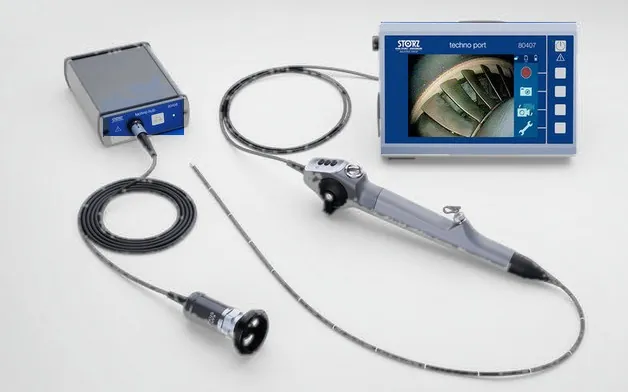
Equipment: Karl Storz industrial endoscope
- High-resolution camera
- Flexible probe
- Tips that enter through a 10 mm opening
- Image and video recording
Why inspect without dismantling
The engine or gearbox does not have to be taken apart. Because the location and extent of the damage are known in advance, it is clear which parts are needed, they are ready before the job starts, and the vessel is not laid up longer than necessary.
What we can see
- Cylinder liners: scoring, wear, bore polishing and lubrication condition
- Piston crowns and rings: carbon deposits, burning, cracks, broken rings
- Valves and valve seats: burning, signs of leakage, deposits
- Cylinder heads and injector tips: combustion marks, water or fuel leaks
- Turbochargers: wear, impact damage and fouling on turbine and compressor blades
- Charge air coolers and heat exchanger tubes: blockage, fouling, corrosion
- Gearboxes: pitting, wear and broken teeth on gears; bearing damage
- Crankcase and bearing area: metal particles and foreign objects
- Inside pipes, tanks and boilers: corrosion, deposits and weld checks
Typical cases
- Metal particles found in the oil: finding which cylinder or gear is damaged without dismantling
- A cylinder with high exhaust temperature: looking inside before deciding to open it
- Condition survey of the main engine and gearbox before buying or selling a vessel
- Recording engine condition before the warranty ends
- Checking after an overhaul that parts were fitted correctly
- Image evidence for insurance and damage surveys
What you receive
After the inspection we report the findings with photos and list the work and parts required. You can receive the maintenance and parts quote together with the report.